Powering Smarter
Operations with AI
The energy sector faces unprecedented complexity — volatile markets, aging infrastructure, and mounting decarbonization pressure. Neurocraft delivers AI-driven intelligence that helps energy companies optimize operations, reduce risk, and lead the transition to a data-driven future.
The Challenge
What Energy Companies Are Up Against
From decades-old infrastructure to a rapidly shifting regulatory landscape, energy organizations face operational complexity that demands more than legacy IT can deliver.
Siloed & Legacy Systems
Decades of disconnected SCADA, historian, ERP, and field data block real-time visibility across operations.
Unplanned Downtime
Equipment failures cascade into costly production losses without predictive intelligence in place.
Regulatory Complexity
Evolving environmental and safety requirements demand reporting accuracy that manual processes simply cannot deliver.
Energy Transition Pressure
Balancing fossil fuel operations with accelerating renewable integration requires entirely new data architectures.
Our Approach
How Neurocraft Transforms Energy Operations
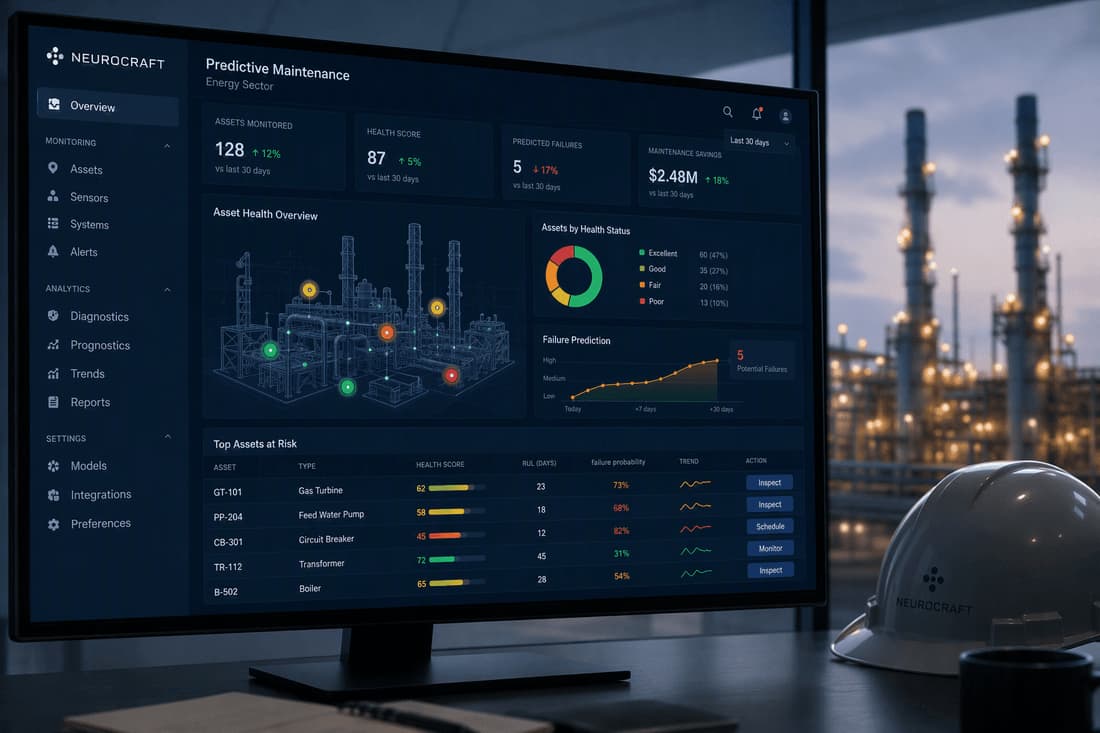
Predict & Prevent — Before the Failure
We connect your OT and IT data streams — SCADA systems, sensor historians, IoT feeds — and deploy machine learning models trained specifically on energy asset behavior. The result: equipment failures identified 2–4 weeks before they occur, giving maintenance teams time to act without disrupting production.
- Connect SCADA, historians, and sensor data into a unified ML pipeline
- Deploy asset-specific models for compressors, turbines, pumps, and rotating equipment
- Prioritize maintenance workorders based on predicted failure probability
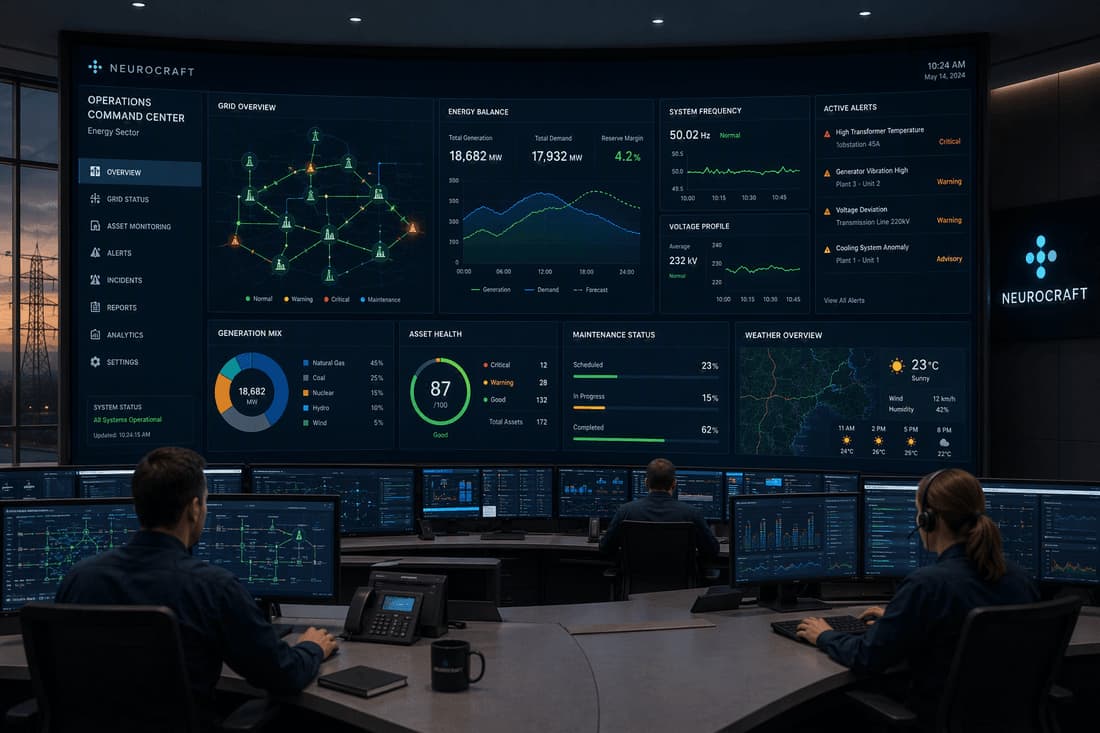
Real-Time Intelligence Across Every Facility
Fragmented dashboards and lagging reports cost energy companies hours of decision-making time every day. Neurocraft unifies operational data into a centralized analytics layer — giving field supervisors and executives live visibility into KPIs, anomalies, and performance trends across every site, simultaneously.
- Unified operational data layer across all sites and asset classes
- Real-time KPI monitoring with automated anomaly detection
- Mobile-ready dashboards accessible from the field or the boardroom
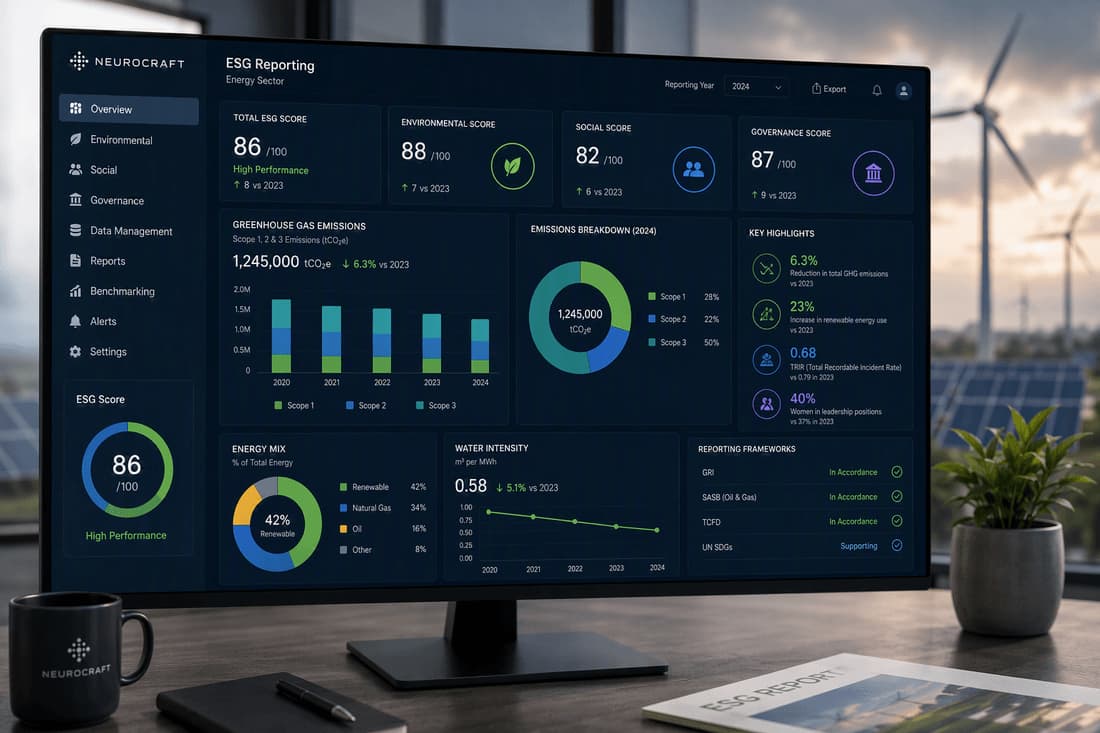
Automate Compliance. Eliminate the Manual Burden.
Regulatory reporting in the energy sector demands precision at scale — from emissions tracking to safety incident documentation. Neurocraft builds automated data pipelines that collect, validate, and format compliance data, reducing manual reporting effort by up to 60% while delivering audit-ready outputs for EPA, FERC, and OSHA requirements.
- Automated emissions monitoring and ESG metric collection
- Audit-ready reporting pipelines with full data lineage
- Integration with EPA, FERC, and state regulatory frameworks
Core Capabilities
Built for the Demands of Energy
OT/IT Data Integration
Bridge operational technology with enterprise systems — SCADA, historians, ERP — into a single, unified data layer.
Predictive Maintenance AI
ML models trained on energy-specific sensor data to predict equipment failure 2–4 weeks before it occurs.
Real-Time Operations
Centralized dashboards giving field and executive teams live visibility across all facilities and assets.
ESG & Compliance Automation
Automated emissions tracking, safety reporting, and audit-ready pipelines aligned to EPA, FERC, and OSHA requirements.
Digital Twin Modeling
Virtual replicas of physical assets and processes for simulation, optimization, and continuous improvement.
Cloud-Native Data Architecture
Scalable cloud platforms purpose-built for the data volume, velocity, and security demands of energy operations.
The Next Step
Ready to become an agent-powered enterprise?
Build securely on Microsoft Azure, Microsoft Fabric, and Azure AI Foundry — with the human oversight, governance, and enterprise architecture required to move from AI pilots to production.
Energy Sectors
Explore by Sector
Each segment of the energy value chain brings its own operational challenges. Explore how Neurocraft addresses the specific needs of each sector.